Pulled a load of washing out of the machine only to find it smells worse coming out than it did going in? You’re not imagining it, and you’re definitely not alone. A smelly washing machine is one of the most common complaints we hear, and the good news is that the specific type of smell you’re dealing with usually tells you exactly what’s going wrong and how to fix it.
What the smell is telling you
Before you reach for any cleaning product, it helps to figure out which smell you’re actually dealing with, since the fix is different depending on the cause.
| Smell Type | Likely Cause |
| Musty or mouldy | Mould or biofilm buildup in the seal or drum |
| Sewage-like | Blocked drain or standpipe issue |
| Eggy or rotten | Bacteria buildup, often from low-temperature washing |
| Burning | Possible mechanical or electrical fault |
Once you know which category your smell falls into, you can go straight to the right fix instead of guessing and hoping for the best.
Musty or mouldy smell: causes and fix
This is by far the most common complaint, and it almost always comes down to moisture sitting in the rubber door seal for too long. Front loaders are especially prone to this because the seal creates a tight loop that traps humidity after every wash. Add in a habit of only ever washing on cold or low temperatures, and you’ve got the perfect conditions for mould and bacteria to settle in and multiply.
Using too much detergent makes the problem worse rather than better. Leftover detergent residue doesn’t just disappear down the drain. Some of it clings to the drum, the seal, and the hidden parts of the machine, and that residue becomes food for mould to grow on over time.
The fix: wipe the door seal dry after every single wash, run a hot tub clean cycle at least once a month, and get into the habit of leaving the door open between washes so trapped moisture actually has a chance to escape rather than sitting there for days.
Sewage or drain smell: causes and fix
If what you’re smelling is closer to sewage than mould, the actual problem is often further down the line rather than inside the machine itself. A blocked or poorly installed drain hose can allow sewer gas to travel back up through the pipework and into your laundry, which is obviously not something a wash cycle on its own is going to fix.
The fix: check that the drain hose isn’t kinked, blocked, or sitting somewhere it shouldn’t be, and make sure it’s installed with a proper air gap rather than pushed all the way down into the standpipe. If the smell is still hanging around after checking all of that, it’s worth getting a plumber to have a look at the standpipe itself, since that’s not something most of us are equipped to diagnose on our own.
Eggy or burning smells
A rotten egg smell is a pretty distinctive one, and it usually points to bacteria buildup inside the machine, often as a direct result of a habit of only ever running cold or low-temperature washes. Cold water is great for saving on energy and being gentle on clothes, but it doesn’t do much to kill off the bacteria that builds up over repeated washes. Throwing in an occasional hot wash, even just once a month, helps knock this back before it becomes a persistent issue.
A burning smell is a completely different situation, and it’s important not to lump it in with the others. This isn’t a cleaning problem at all. It’s a sign that something mechanical or electrical inside the machine isn’t working the way it should be. If you notice a burning smell, the safest move is to switch the machine off immediately, unplug it if you can, and get it looked at by a qualified technician before using it again.
Front loaders versus top loaders
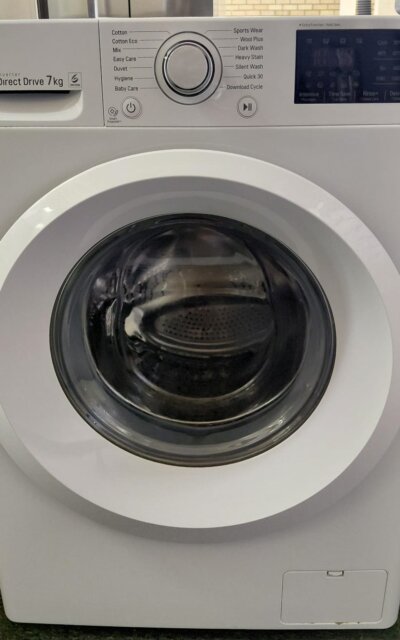
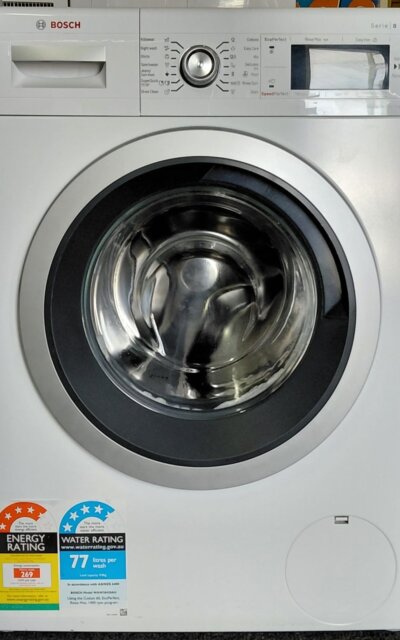
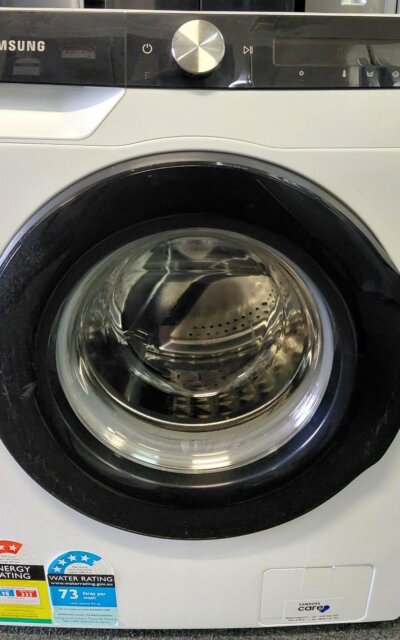
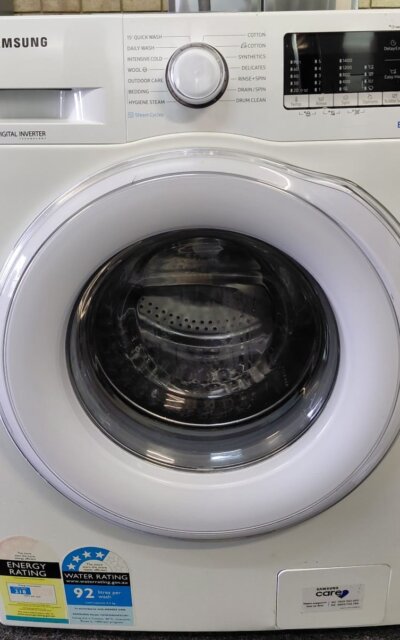
It’s worth knowing that front loaders and top loaders tend to develop different smell problems, mostly down to how each machine is built. Front loaders rely on a rubber door seal to keep water in during the wash, and that seal creates a sealed, humid pocket that doesn’t dry out easily on its own. This is exactly why front loaders are far more prone to musty and mouldy smells than top loaders, and why wiping the seal dry after each wash makes such a noticeable difference over time.
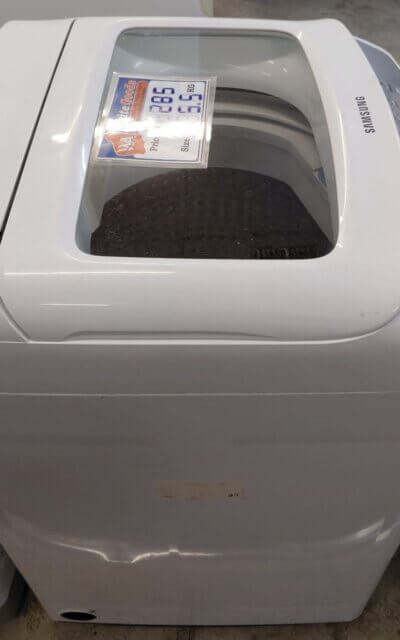
Top loaders don’t have that same sealed door design, so they tend to air out more naturally between washes. That doesn’t mean they’re immune to smells though. Detergent residue can still build up around the agitator and inside the drum over time, and a dirty detergent dispenser causes the same problems in a top loader as it does in a front loader. The fix is largely the same for both types: regular tub clean cycles, sensible detergent dosing, and keeping the machine dry and aired out between uses.
Building a prevention routine
Once you’ve dealt with the immediate smell, a simple ongoing routine stops it from coming straight back:
- Run a hot tub clean cycle once a month, even if the machine seems fine
- Wipe the door seal dry after every wash, especially on front loaders
- Leave the door and detergent drawer open between washes so moisture can escape
- Use the correct detergent dose for each load rather than guessing or overdoing it
- Throw in an occasional hot wash to help keep bacteria levels in check
- Check the drain hose position every so often to make sure nothing has shifted or kinked
When the smell means a deeper fault
If you’ve gone through all of the cleaning steps properly and the smell keeps coming straight back within days, or you’re noticing a burning smell, unusual noises, or leaks alongside it, that’s no longer something a cleaning routine is going to solve. At that point it’s genuinely worth getting the machine looked at by someone who can diagnose the actual issue, rather than continuing to clean around a problem that isn’t going away. Catching a developing fault early can also save you from a much bigger repair bill, or a machine that fails completely, further down the track.
FAQ
Why does my washing machine smell like rotten eggs?
An eggy smell usually comes from bacteria buildup inside the machine, often caused by frequently washing on cold or low temperatures without an occasional hot wash to balance it out.
How do I remove mould smell from my washing machine?
Run a hot tub clean cycle, wipe down the door seal thoroughly after every wash, and leave the door open between washes so mould doesn’t get the chance to return.
Can a smelly washing machine be unsafe?
Most smells are simply a cleaning issue and nothing to worry about, but a burning smell specifically can indicate an electrical or mechanical fault and should be checked by a technician immediately rather than ignored.
Is it normal for a new washing machine to smell?
A very faint plastic or rubber smell in the first few washes of a brand new machine is generally nothing to worry about and usually fades on its own. Anything stronger, or a smell that lingers well beyond the first few weeks, is worth mentioning to your retailer or having checked.
For the full cleaning method from start to finish, take a look at how to clean a washing machine, and you can browse our range of front loader washing machines if yours is due for an upgrade rather than another repair.