So, what size fridge do you need? For most Australian households, the simple answer is around 100 to 150 litres per adult, plus roughly 50 litres for each child. That gives you a solid starting point before you factor in your kitchen space and how you actually shop.
We see a lot of fridges come through our Welshpool workshop, and the sizing question comes up constantly. People often buy based on what looks good in the showroom, not what actually fits their home or their weekly shop.
This blog breaks it down properly, using litres per person, real household examples, and a few lessons we’ve picked up from years of delivering fridges into Perth kitchens.
The quick rule: litres per person
Fridge capacity is measured in litres, and it’s the number you should focus on first, before brand or features. As a rule of thumb, allow 100 to 150 litres for the first adult, then add 50 to 60 litres for every additional person in the house. Kids under 12 generally need less, so 50 litres per child is a fair estimate.
This isn’t an exact science, though. If you cook from scratch most nights and shop weekly, you’ll want to sit toward the higher end. If you shop a little and often, or eat out a fair bit, you can size down without any hassle.
Fridge size by household
For 1 to 2 people, a fridge between 200 and 300 litres usually does the job. Couples who don’t cook elaborate meals often find 250 litres more than enough.
A family of 3 to 4 typically needs somewhere between 300 and 450 litres. This is genuinely the most common size we install across Perth homes, since it comfortably fits a week’s groceries, school lunches and the odd big batch of leftovers.
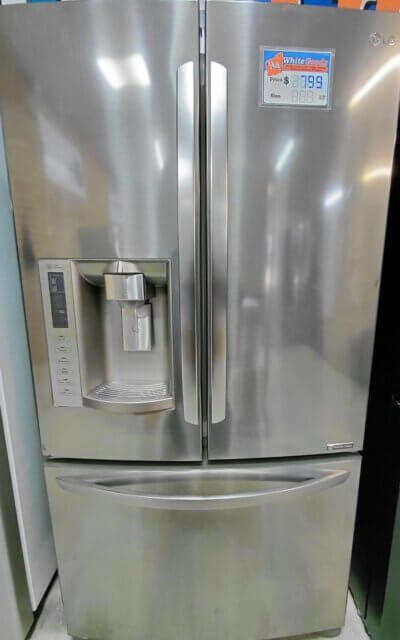
Households of 5 or more usually need 450 litres or more. If you shop in bulk, freeze meals ahead, or entertain often, a French door or side-by-side model with extra freezer space tends to work best.
Keep in mind these numbers are a guide, not a rulebook. Two people who host dinner parties every weekend might need just as much room as a family of four.
Measuring your space and door clearance
Before you fall in love with a fridge online, grab a tape measure. Measure the width, height, and depth of the space where the fridge will go, and check at a few different points, since kitchen walls are rarely dead straight.
Don’t forget clearance around the sides, back, and top. Fridges need airflow to run efficiently, so leaving a few centimetres of gap stops the compressor from working overtime. Also check which way the door needs to swing. We’ve turned up at plenty of homes where the fridge fits the space perfectly, but the door can’t open past 90 degrees because of a nearby wall or bench.
If you’re unsure what will actually suit your kitchen, it helps to browse fridges by size before you commit to a model, so you can compare dimensions side by side.
Don’t forget delivery access
This is the part people overlook the most, and honestly, it’s where we see the most problems on delivery day. A fridge might fit your kitchen perfectly but still not make it through your front door, hallway, or around a tight staircase corner.
Measure your entryways, hallway width, and any tight turns before you buy. If you live in a unit or townhouse, check the lift or stairwell dimensions too. Our delivery team deals with this regularly, and a five-minute measuring job at home can save a return trip and a restocking fee later.
Recommended sizes and types
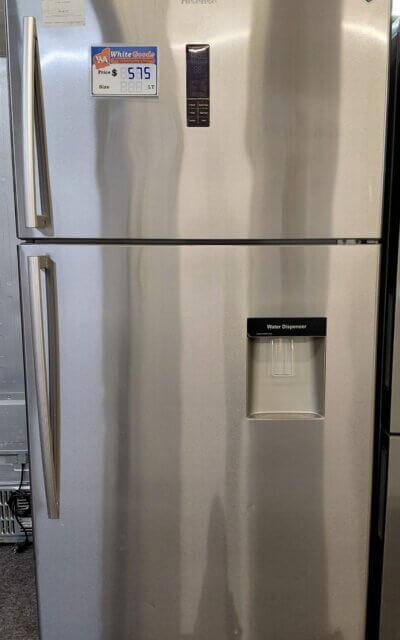
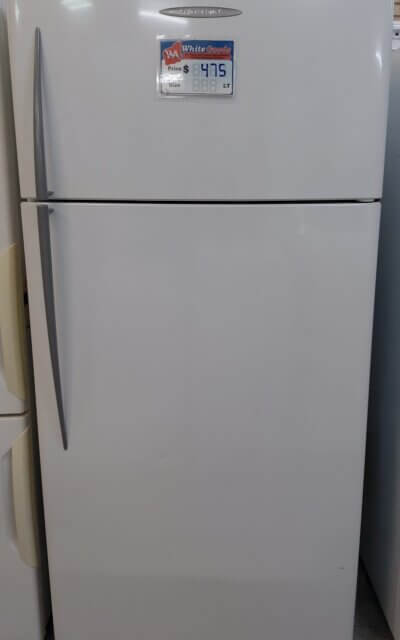
Top-mount and bottom-mount fridges suit smaller households well, since they’re generally narrower and easier to fit into tighter kitchens. For families, French door and multi-door fridges offer more shelf flexibility and larger freezer sections, which suit batch cooking and bulk shopping.
If you’re comparing styles, it’s worth reading up on fridge types compared before deciding, since the layout affects usable space just as much as the total litre count.
It’s also worth checking the fridge’s energy rating before you buy, since running costs can vary noticeably between similar-sized models. The Australian Government’s Energy Rating website is a reliable place to compare star ratings and estimated yearly running costs.
Buying used? A quick note
If budget is tight, a second-hand fridge can be a reasonable option, but only if it’s been properly tested and cleaned first. We’ve seen plenty of secondhand fridges arrive with worn seals or tired compressors that cost more in power bills than they saved upfront. If you’re weighing this up, our guide on buying a second-hand fridge covers what to check before you hand over any cash.
FAQs
What size fridge do I need for a family of 4?
A family of four generally needs a fridge between 300 and 450 litres, depending on how often you shop and cook.
How many litres of fridge per person?
Allow around 100 to 150 litres for the first adult, then 50 to 60 litres for each additional person, and roughly 50 litres per child.
What is a good fridge size for a couple?
Most couples do well with 200 to 300 litres, though frequent entertainers may prefer closer to the higher end.
Every fridge we sell at our Welshpool store is tested, cleaned and backed by a 90-day warranty, and we deliver right across Perth. If you’re still unsure about sizing, our team is happy to talk through your kitchen and shopping habits before you buy.