Running a washing machine adds up fast. With electricity prices climbing across Australia, picking an energy-efficient model is one of the smartest moves you can make. This guide covers how to spot an efficient washer, which models are worth buying in 2026, and how to cut running costs even further.
Why Energy Efficiency Matters in Washing Machines
The average Australian household runs the washing machine 5 to 7 times a week. That is a lot of electricity and water.
Electricity in Australia now costs around 30 to 35 cents per kWh on average. An old or low-rated washing machine can cost $150 or more per year to run. A modern, high-efficiency model can bring that down to under $60.
Water costs matter too. In cities like Perth and Sydney, water bills have increased steadily. A water-hungry top loader can use 150 litres per wash. Some front loaders use as little as 50 litres.
Over a 10-year lifespan, those differences add up to hundreds of dollars. Choosing an energy efficient machine from the start is not just good for the environment. It is good for your wallet.
And it is not just about money. Australia has some of the highest household electricity emissions per capita in the world. Every kilowatt-hour you save at home makes a small but real difference. When millions of households make the same choice, the impact is significant. Picking a high-rated machine is one of the easiest ways to reduce your home’s carbon footprint without changing your lifestyle.
How Energy Ratings Work for Washing Machines
When you look at a washing machine in Australia, you will see two rating labels. Both matters.
The Energy Rating Label shows a star rating from 1 to 6. More stars mean less electricity used. The label also shows the estimated kWh used per year. This number lets you compare models directly. A machine using 150 kWh/year will cost you less than one using 280 kWh/year.
The WELS Label (Water Efficiency Labelling and Standards) rates water usage from 1 to 6 stars. The more stars, the less water the machine uses per cycle.
Look for at least 4 stars on both labels. Anything 5 stars or above is excellent.
You can check the official ratings for any appliance on the Australian Government Energy Rating website, which lists registered models and their verified scores.
One more figure to check is litres per wash. This tells you exactly how much water a machine uses each cycle. Lower is better.
It is also worth knowing that star ratings are tested under standard lab conditions. Real-world usage depends on your wash temperature, load size, and cycle choice. That is why the energy-saving tips later in this guide matter just as much as the rating on the label.
A newer addition to watch for is smart home compatibility. Some high-efficiency models now connect to apps or home energy systems. They let you schedule washes during solar peak hours or off-peak tariff windows automatically. If you have rooftop solar, this feature alone can bring your washing cost close to zero on sunny days.
Top 5 Most Energy Efficient Washing Machines in Australia
Here are five models that consistently score well on both energy and water efficiency.
1. Fisher and Paykel 8kg Front Loader (WH8060J3)
- Energy rating: 4.5 stars
- Water rating: 4.5 stars (WELS)
- Energy use: approx. 165 kWh/year
- Capacity: 8kg
- Price range: $900 to $1,100
- Best for: Families of 3 to 4 who want a reliable, mid-range machine
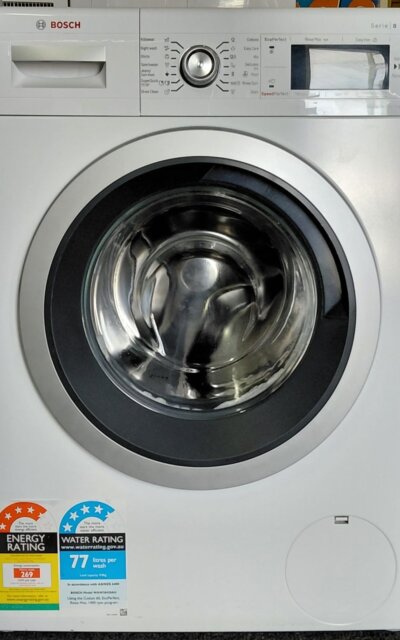
2. Bosch Series 69kg Front Loader (WAW28441AU)
- Energy rating: 5 stars
- Water rating: 4.5 stars (WELS)
- Energy use: approx. 145 kWh/year
- Capacity: 9kg
- Price range: $1,400 to $1,700
- Best for: Larger households wanting premium efficiency
3. LG 8.5kg Front Loader (WV5-1208W)
- Energy rating: 4.5 stars
- Water rating: 4 stars (WELS)
- Energy use: approx. 175 kWh/year
- Capacity: 8.5kg
- Price range: $950 to $1,200
- Best for: Medium households wanting smart features at a fair price
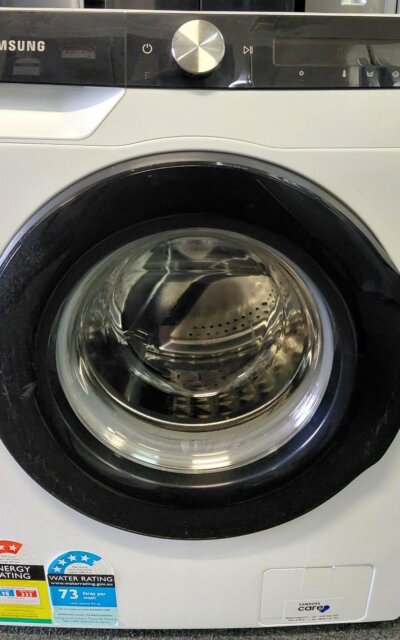
4. Samsung 9kg Front Loader (WW90T534DAW)
- Energy rating: 4.5 stars
- Water rating: 4.5 stars (WELS)
- Energy use: approx. 160 kWh/year
- Capacity: 9kg
- Price range: $1,100 to $1,350
- Best for: Those who want a balance of capacity, efficiency, and brand reliability
5. Electrolux 8kg Front Loader (EWF8024Q5WA)
- Energy rating: 4 stars
- Water rating: 4 stars (WELS)
- Energy use: approx. 185 kWh/year
- Capacity: 8kg
- Price range: $800 to $1,000
- Best for: Budget-conscious buyers who still want solid efficiency
All five are available as refurbished units through specialist retailers, which can save you $300 or more while keeping strong star ratings.
When comparing models, do not just look at the star rating. Look at the kWh per year figure side by side. Two machines can both carry 4.5 stars but differ by 30 or 40 kWh annually. Over ten years, that gap costs real money. Always compare the actual consumption number, not just the stars.
Front Loader vs Top Loader: Which Is More Efficient?
Front-loaders win on efficiency. Full stop.
A standard top loader uses around 120 to 180 litres of water per wash. A front loader typically uses 50 to 80 litres. That is a 40 to 60 percent reduction.
On energy, front-loaders also come out ahead. They use a tumbling action instead of an agitator, which needs less motor power. They also spin faster, which removes more water before drying. Less moisture in your clothes means less time and energy spent in the dryer, too. That is a saving most people do not think about until they see their power bill.
Top loaders are cheaper upfront and easier to load. But over time, the running cost difference adds up. A 4-star front loader can save you $60 to $80 per year compared to a 2-star top loader.
There is also a practical consideration. Front loaders are gentler on fabrics. The tumbling action causes less wear and tear than the agitator in a top loader. Your clothes last longer, which means you spend less replacing them. It is a small but real benefit that adds to the overall value of going with a front loader.
If long-term savings matter to you, a front loader is the better investment.
What Is a High Efficiency Washer?
You might see the term “HE washer” when shopping. HE stands for high efficiency.
HE washers use less water than traditional machines. Because they use less water, they also need less detergent. In fact, using regular detergent in an HE washer is a problem. It creates too many suds and can damage the machine over time.
Always use a detergent labelled “HE” or “suitable for front loaders.” These are low-sudsing formulas designed for low-water machines.
Most front loaders sold in Australia today are HE machines. If your machine has a 4-star or higher WELS rating, it almost certainly qualifies. Using the right detergent protects the machine and keeps it running efficiently for longer.
One thing worth mentioning is drum size. A larger drum does not always mean higher efficiency. An oversized machine running small loads wastes water and energy on every cycle. Match the drum capacity to your actual household needs. A family of two rarely needs a 10kg machine. An 8kg front loader is usually the sweet spot for a household of three to four people.
Energy Saving Tips for Your Washing Machine
Even the best machine can cost more than it should if you use it the wrong way. These tips make a real difference.
- Wash in cold water. Heating water uses around 80 to 90 percent of a washing machine’s energy. Cold water cycles clean clothes just as well for everyday loads. Switching to cold can cut your washing energy use in half.
- Run full loads. A half-empty machine uses almost as much energy and water as a full one. Wait until you have enough washing to fill it.
- Use eco mode. Most modern machines have an eco or economy cycle. It runs at lower temperatures and uses less water. It takes longer, but it uses significantly less power.
- Run at off-peak times. Many energy plans charge less per kWh during off-peak hours, usually late at night or early morning. Check your plan and schedule washes accordingly.
- Descale regularly. Mineral buildup affects performance. Clean your machine every few months with a washing machine cleaner or a hot cycle with white vinegar. A clean drum runs more efficiently.
- Check the spin speed. A higher spin speed extracts more water from your clothes before they go into the dryer. Most efficient machines spin at 1200 RPM or higher. Using a higher spin setting reduces drying time and saves energy across the whole laundry process, not just the wash cycle.
- Skip the half-load option when you can. Some machines offer a half-load setting, but it rarely uses exactly half the resources. You get far better efficiency by waiting for a full load and running one complete cycle instead of two smaller ones.
Refurbished Energy-Efficient Washers: Smart Buy?
A brand new 2-star washing machine costs less upfront. But a refurbished 4-star machine often costs less to run and sometimes less to buy.
Here is why that matters. Energy star ratings are set at the time of manufacture. They do not decline with age. A well-maintained 4-star machine from three years ago still performs at 4 stars.
A quality reconditioned washing machine from a reputable seller will have been tested, repaired if needed, and cleaned before resale. Good retailers also offer a warranty.
It is also worth thinking about what “new” actually means. A new low-rated machine still produces more emissions and uses more resources over its lifetime than a refurbished high-rated one. Buying refurbished reduces manufacturing demand and keeps working appliances out of landfill. For buyers who care about sustainability, it is often the more responsible choice, not just the cheaper one.
One more thing to consider is availability. Refurbished stock moves quickly, especially for popular brands like Fisher and Paykel, LG, and Samsung. If you see a well-rated model at a good price, it is worth acting on it. Waiting often means missing out. Checking regularly or asking a retailer to notify you when specific models come in is a smart approach.
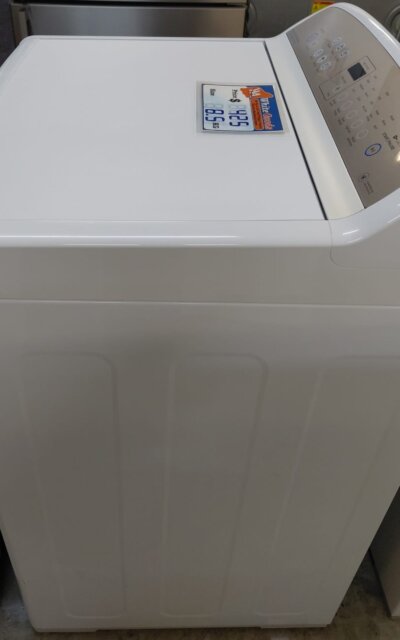
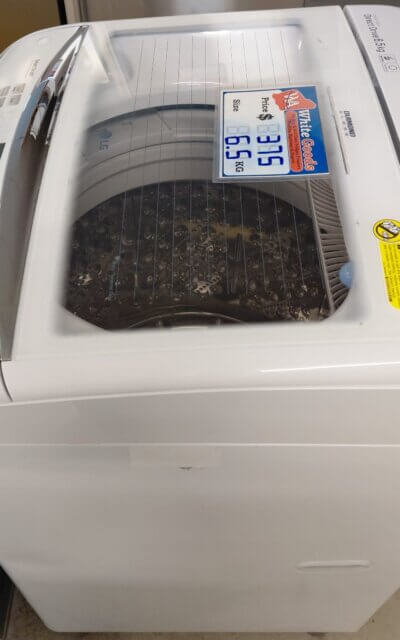
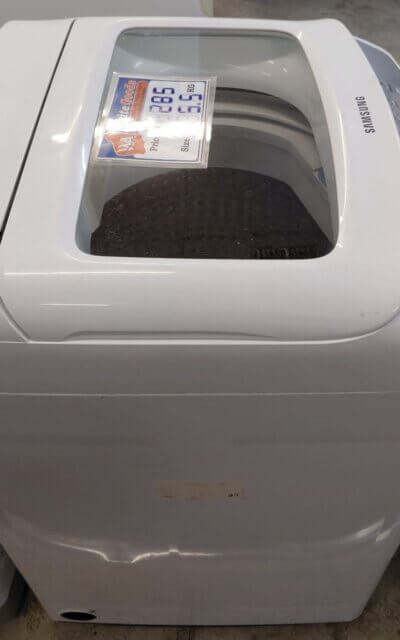
At WA Whitegoods, all refurbished machines are tested and come with a warranty. That gives you the efficiency of a high-rated machine at a fraction of the new price.
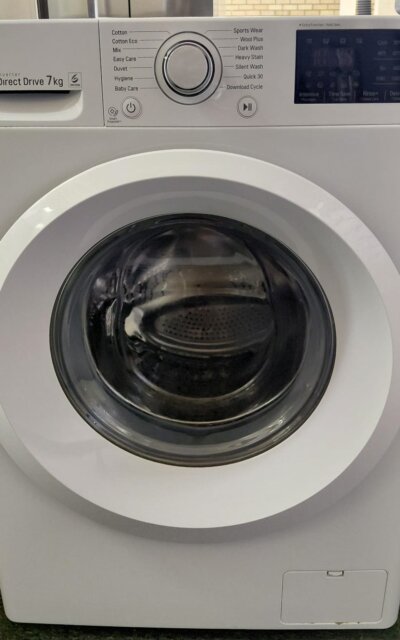
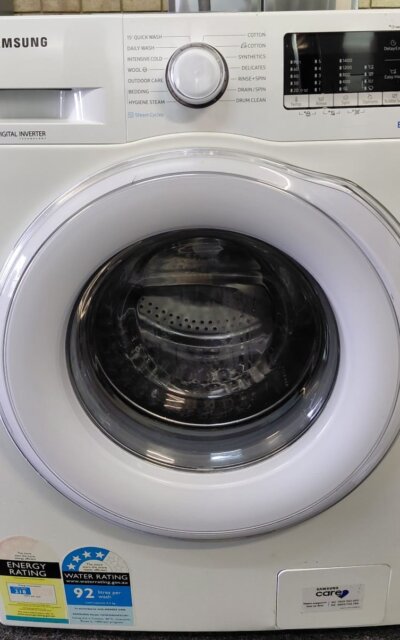
Before you buy new, it is worth browsing the refurbished washing machines at WA Whitegoods to see what is available.
Frequently Asked Questions
How much does a washing machine cost to run each year in Australia?
It depends on how often you use it and what star rating it has. A 4-star front loader used five times a week typically costs $50 to $80 per year. An older, low-rated top loader doing the same workload can cost over $150 per year. The star rating and water usage are the two biggest factors.
What type of washing machine uses the least energy?
Front loaders with 4.5 stars or higher. They use a tumbling action that needs less motor power and spins faster to remove more water. That combination keeps both energy and water use low. Among front-loaders, smaller capacity models also use less per cycle.
How many stars should I look for on the energy label?
Aim for at least 4 stars on the energy label and 4 stars on the WELS water label. If you can get 5 stars on either or both, even better. Do not just look at stars, though. Also, check the kWh per year figure and litres per wash to compare models directly.
Does washing in cold water actually clean clothes properly?
Yes, for most loads. Modern detergents are designed to work effectively in cold water. The only exception is heavily soiled items or specific hygiene washes, where a warm cycle is better. For everyday clothes, bedding, and towels, cold water works well and saves a significant amount of energy.
Is buying a second-hand washing machine a good idea?
It can be. The key is checking the original star rating and buying from a seller who has tested and inspected the machine. A refurbished 4-star machine from a reputable dealer is a better purchase than a cheap new 2-star model. Ask about the warranty before you commit.
Shop Energy Efficient Washing Machines
Ready to find a machine that keeps your bills down? WA Whitegoods stocks a range of energy-efficient front loaders, including quality refurbished models that carry strong star ratings.
Browse the full range and find a machine that suits your household size and budget.