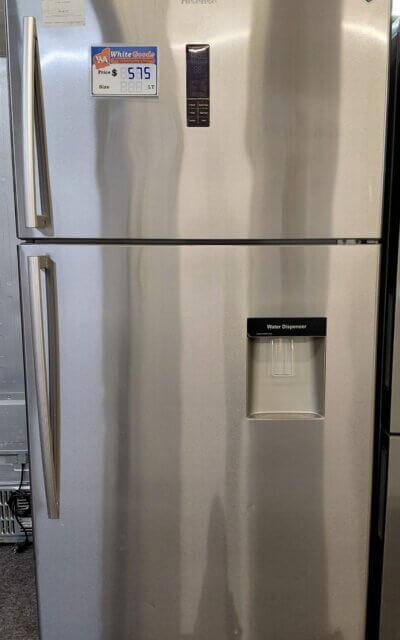
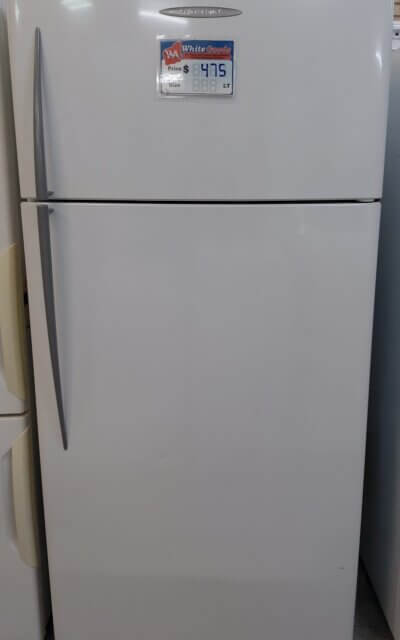
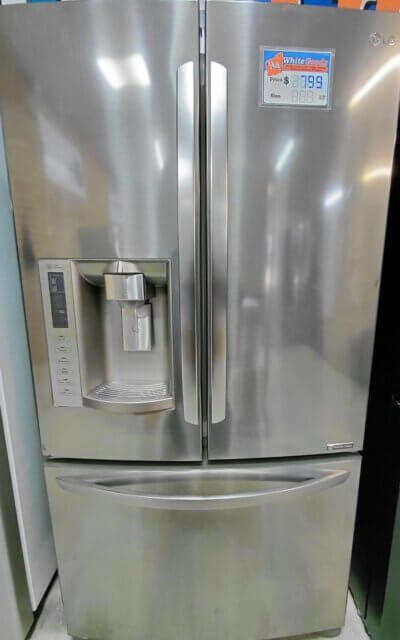
So how many watts does a fridge use? Most household fridges draw between 100 and 250 watts while running, though the compressor doesn’t run all day. Once you factor in kWh and your local electricity rate, you can work out a fairly accurate yearly cost. That’s what we’ll discuss here, using current Perth rates and real examples from fridges we see on the bench each week.
How much electricity a fridge uses (watts vs kWh)
Watts measure how much power an appliance draws at any given moment. A fridge might be rated at 150 watts, but it doesn’t run at that level constantly. The compressor cycles on and off throughout the day, so actual electricity use is lower than the wattage label suggests.
This is where kWh comes in. A kilowatt-hour is the unit your power bill actually charges you for. It’s simply 1,000 watts used for one hour. So, if your fridge runs its compressor for around 8 hours a day at 150 watts, that’s roughly 1.2 kWh per day.
Most modern fridges use somewhere between 300 and 600 kWh per year. Older units, or large family fridges with an ice maker, often sit at the higher end. It also helps to check the energy label on the appliance itself, since manufacturers list an estimated annual kWh figure there. That number is based on standard test conditions, so your real-world use might land a bit higher or lower depending on your household.
What it costs to run per year (Perth rates)
From 1 July 2026, Synergy’s standard residential rate is at 33.26 cents per kWh, with a daily supply charge of around $1.19. Using that rate, here’s a rough guide to annual running costs based on how much electricity a fridge uses:
| Fridge type | Estimated yearly usage | Estimated yearly cost |
| Small bar fridge | 200 kWh | around $67 |
| Standard single door | 350 kWh | around $116 |
| Large double door with ice maker | 550 kWh | around $183 |
| Older fridge (10+ years) | 700 kWh or more | $233 or more |
These figures are estimates only, since actual fridge running costs depend on the model, its age, and how it’s used day-to-day. Still, they give you a solid starting point for comparing what you’re paying now against what a newer model might cost.
What affects your fridge’s running cost
A few things push fridge power consumption up or down. Door seals matter more than most people realise. A worn seal lets cold air escape, so the compressor has to work harder and longer to keep the temperature steady.
Placement matters too. A fridge next to the oven or in direct sun will run warmer and use more power just to compensate. Overloading the fridge or leaving large gaps of space both reduce efficiency in different ways.
Energy rating also plays a big role. A fridge with more stars on its label will generally cost less to run than an older model with a similar capacity. Two fridges of the same size can carry very different star ratings, and that gap adds up fast over a year of daily use.
If you’re shopping around, it’s worth comparing energy-efficient fridges before you commit to a model, since the sticker price rarely tells the full story of what you’ll pay over time.
Old vs new: the efficiency gap
This is where the real savings usually show up. A fridge built 15 years ago can use two to three times more electricity than a comparable new model, even if it still looks and runs fine on the outside.
We see this pattern often on the bench. Older compressors weren’t designed with today’s efficiency standards in mind, and insulation technology has improved a lot since then. A fridge that’s still working doesn’t mean it’s still cheap to run.
If your fridge is getting on in years, it’s worth checking how long do fridges last to get a sense of whether repair or replacement makes more sense for your situation.
That said, an older fridge in good condition isn’t automatically a bad choice. If it’s been well maintained, the running cost gap might be smaller than you’d expect. It’s worth comparing actual numbers rather than assuming newer is always better.
Standby draw and other hidden costs
Even when nothing seems to be happening, a fridge is never fully off unless it’s unplugged. The compressor, thermostat, and any digital display all draw a small amount of power around the clock. This standby draw is usually minor compared to active cooling, but it still adds up over a full year.
Fridges with extra features tend to use more in the background. Ice makers, water dispensers, and digital temperature displays all pull a bit of extra power just by being switched on. None of these are high costs on their own, but combined with an ageing compressor, they can quietly push your bill higher than expected.
How to cut your fridge’s running cost
A few small habits can lower your fridge’s electricity use without any real effort:
- Check door seals every few months and replace them if they’ve gone soft or torn
- Keep the fridge away from ovens, direct sun, or other heat sources
- Set the temperature to around 3 to 4 degrees rather than colder than necessary
- Leave some space around the back and sides for airflow
- Avoid packing the fridge so full that air can’t circulate
If your fridge is old and still costing a lot to run, a tested and refurbished model can be a practical middle ground. It costs less than buying new, and a properly reconditioned unit should run close to its original efficiency. For a broader look at appliance running costs, the Energy Rating website’s guide to fridges and freezers is a useful reference when comparing models.
FAQs
How many watts does a fridge use?
Most fridges use between 100 and 250 watts while the compressor is running, though average daily use is lower once cycling is factored in.
How much does it cost to run a fridge per year in Australia?
In Perth, a standard fridge typically costs between $100 and $200 a year to run, depending on its size, age, and efficiency rating.
Do old fridges use more electricity?
Yes, generally speaking. Older fridges often use two to three times more electricity than newer, energy-rated models of a similar size.